
Building Democratic and Inclusive School Communities: The EU-SIDE SAP in Leiria and Its Cascading Impact Across Schools

The Erasmus+ project EU-SIDE (European Social Innovation and Democratic Education) seeks to strengthen democratic values, social innovation competences, and inclusive participation in education by supporting teachers and schools in addressing real social challenges through innovative pedagogical approaches. The project promotes a comprehensive framework that combines collaboration, agency, future-oriented systemic inquiry, and innovative thinking, helping schools create learning environments where students become active contributors to positive social change.
A particularly significant milestone of the project was the Short-term Activity Programme (SAP) held in Leiria, Portugal, in March 2026. During this international meeting, educators from different educational sectors and countries worked together to explore practical methodologies for democratic participation, social innovation, inclusion, empathy, and restorative approaches to school coexistence. One of the highlights of the programme was a workshop dedicated to Restorative Practices and Dialogue Circles, which provided participants with practical tools to strengthen relationships, resolve conflicts constructively, and foster a sense of belonging within school communities.
The impact of the SAP extended far beyond the event itself. Through an ambitious cascade training process, participating teachers transferred the knowledge, methodologies, and resources acquired in Leiria to colleagues in their own schools. As a result, EU-SIDE principles reached educational communities across different educational levels, including primary schools, secondary schools, vocational education centres, and rural schools.
The Leiria SAP: Learning Through Dialogue and Participation
The Leiria SAP focused on strengthening teachers’ capacity to promote democratic and inclusive educational environments. Among the most appreciated activities was the training session on Restorative Practices, centred on the use of Dialogue Circles as a tool for community building, prevention of conflict, and development of social and emotional competences.
Participants experienced Dialogue Circles first hand, exploring their structure, facilitation techniques, and practical classroom applications. The workshop emphasized that healthy school coexistence is built not only through rules and regulations but through meaningful relationships. Teachers learned how circles create safe spaces where every participant has an equal opportunity to be heard, where empathy is cultivated, and where trust is strengthened.
The training introduced key elements of restorative practice:
- Active listening.
- Respectful communication.
- Shared responsibility.
- Community building.
- Conflict prevention and repair.
- Social and emotional learning.
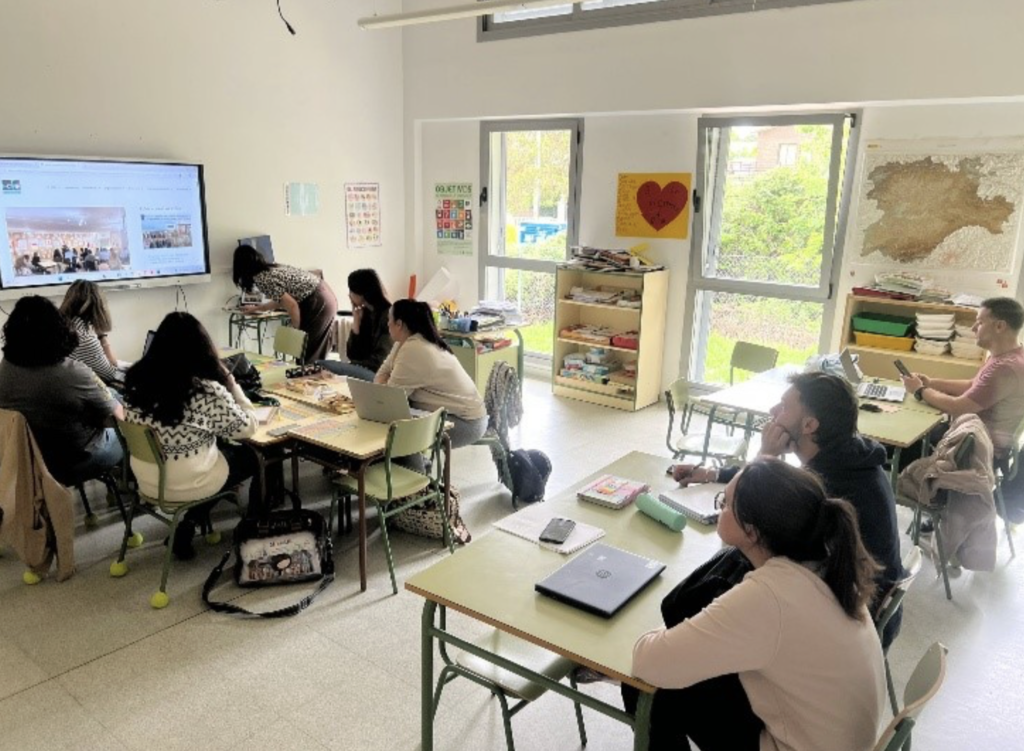
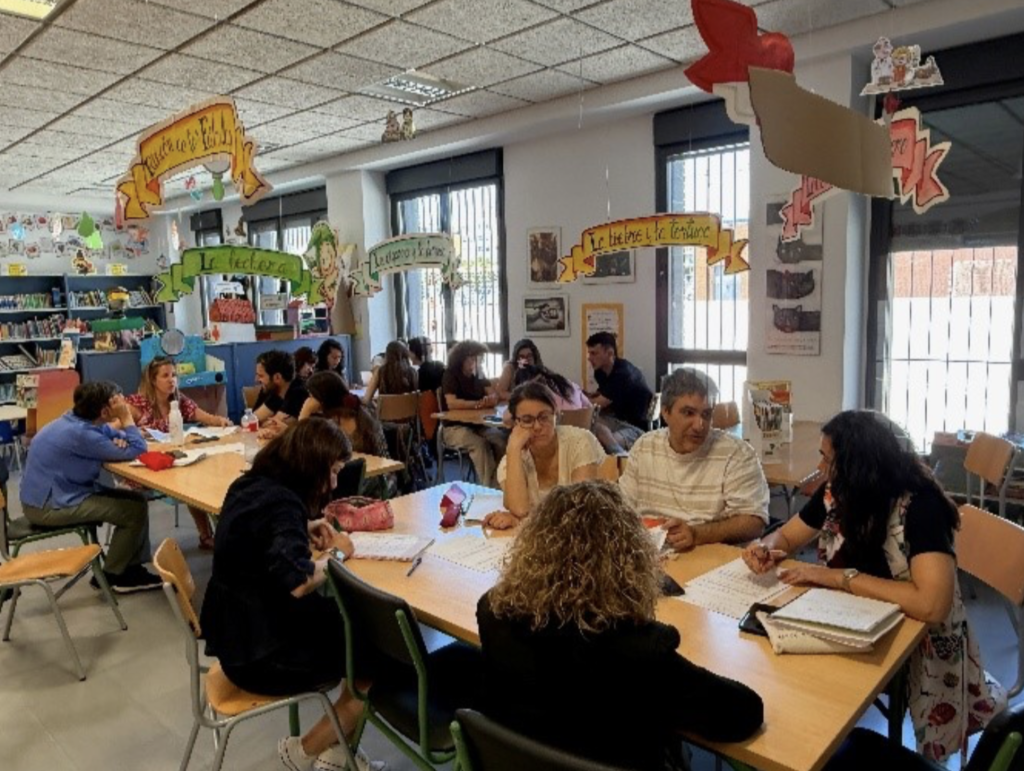
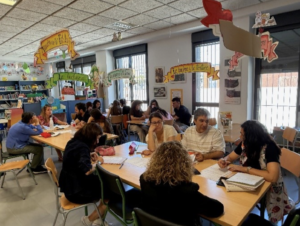
Cascade training at CRA Siglo XXI
Participants designed their own dialogue circles to address common classroom challenges such as student isolation, poor group climate, lack of respect, and interpersonal conflicts. Through collaborative work, they created restorative questions aimed at helping students reflect on their behaviour, understand the impact of their actions, and propose solutions collectively.
The workshop also explored the distinction between punitive and restorative approaches to conflict. Rather than focusing on blame and punishment, restorative practices encourage students to examine what happened, understand how others were affected, and identify actions that can repair harm and rebuild relationships.
Dialogue Circles as a Practical Resource for Schools
An important outcome of the SAP was the dissemination of concrete resources that teachers could immediately implement in their schools. Among these resources was the Circle Calendar, a structured collection of daily circle questions designed to facilitate regular classroom dialogue throughout the academic year.
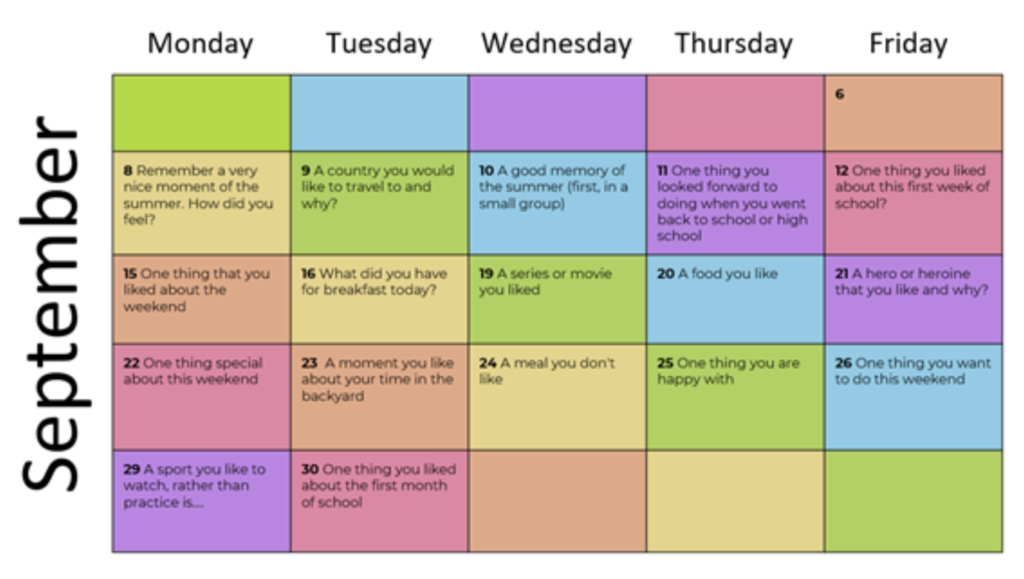
Extract from Circle Calendar
The calendar provides age-appropriate prompts addressing emotions, relationships, wellbeing, inclusion, personal experiences, aspirations, and democratic participation. By incorporating short dialogue routines into everyday classroom life, teachers can create consistent opportunities for students to express themselves, listen to others, and develop interpersonal skills.
This practical approach proved particularly valuable because it transformed restorative practices from an occasional intervention into a sustainable school culture strategy. Teachers reported that the simplicity and flexibility of the resource made implementation accessible across a variety of educational settings.
From Training to Practice: The Samir Case Study
One of the most significant outcomes of the cascade process was the development of learning experiences inspired by EU-SIDE methodologies. A particularly noteworthy example was the case study of Samir, a newly arrived 15-year-old student facing linguistic barriers, social isolation, and difficulties participating fully in school life.
Using the EU-SIDE framework, teachers designed a sequence of activities that combined empathy development, critical thinking, systemic inquiry, and collaborative problem-solving. Students analysed Samir’s situation through an empathy map, exploring his feelings, behaviours, fears, and the assumptions that teachers and classmates might unconsciously hold.
The intervention continued with the “Belief Traffic Light,” enabling students to distinguish between myths, doubts, and evidence-based statements about migration, inclusion, diversity, and language learning. This activity promoted critical media literacy and challenged stereotypes often associated with newly arrived students.
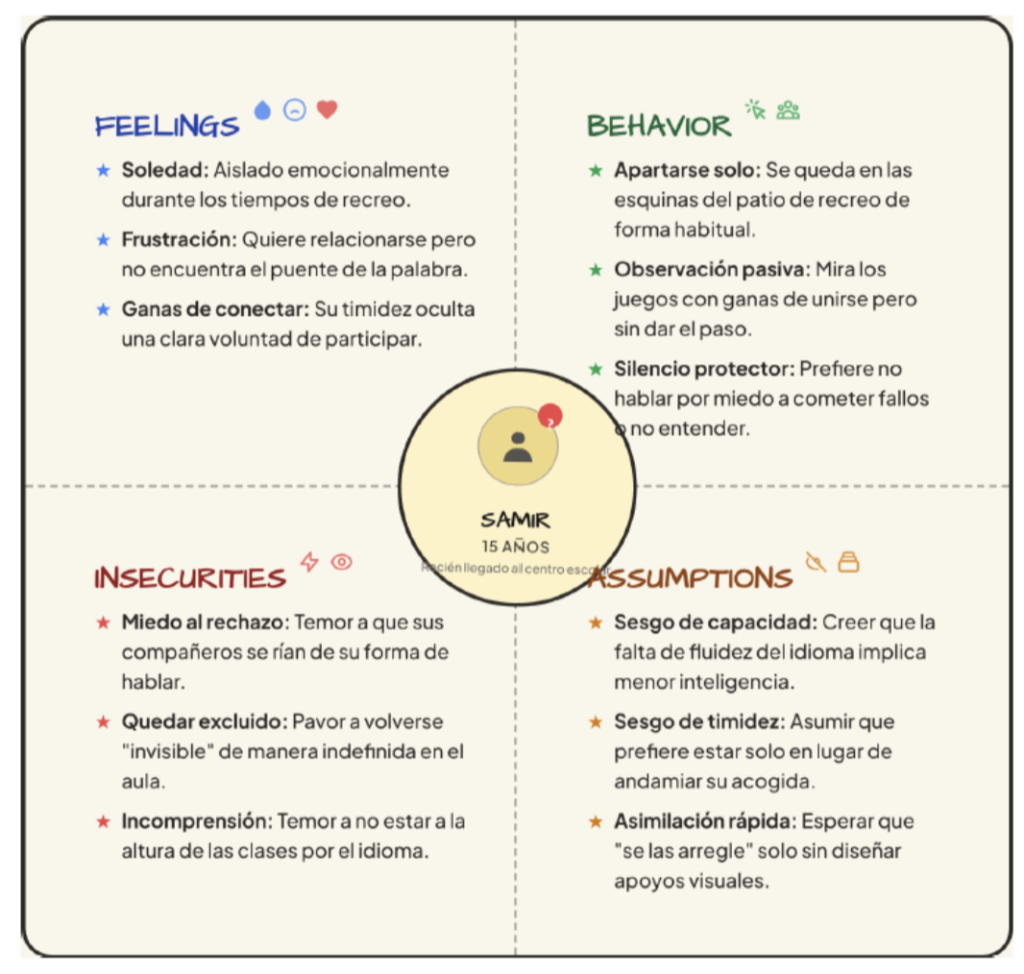
Samir Case Study
Another innovative activity was the “Social Iceberg,” which encouraged students to identify both visible manifestations of exclusion and the deeper structural and emotional causes that remain hidden beneath the surface. Through this exercise, participants developed a more systemic understanding of social problems and learned that exclusion often originates from fear, lack of communication, prejudice, and limited opportunities for participation.
The project culminated in the design of inclusive recreational activities aimed at increasing participation and belonging. Students proposed peer-support systems, cooperative games, adapted sports, and inclusive playground initiatives to help newly arrived students connect with their peers.
Feedback from teachers highlighted increased student empathy, stronger critical thinking skills, and a greater willingness to propose practical solutions to social challenges. Students became active agents of change rather than passive observers of inequality.
Diverse School Projects Inspired by EU-SIDE
The cascade training process generated a remarkable diversity of initiatives across participating schools.
At CRA Siglo XXI, teachers designed the project “Flavours that Unite Us: Cuisine, Culture and Coexistence.” The initiative used an intercultural cooking workshop within a local cultural festival to challenge stereotypes, promote inclusion, and strengthen intercultural understanding. Students investigated different cultures, analysed misconceptions, developed empathy, and shared cultural experiences with the wider community.
At CEIP Venerables, teachers developed a school-wide initiative focused on democratic participation. Students elected class representatives, participated in meetings with school leadership, discussed collective concerns, voted on decisions, and reflected on shared responsibility. The project aimed to help students understand democracy not as an abstract concept but as a lived experience.
Cascade training at CEIP Fuentecillas
Teachers at CEIP Venerables also reported positive outcomes from daily assemblies, student committees, cooperative projects, and values-based discussions. Over time, students became increasingly confident in expressing opinions, listening respectfully, and engaging in collaborative decision-making.
At CEIP Fuentecillas, cascade training inspired activities focused on collaboration, empathy, engagement, systemic inquiry, and storytelling. The implementation was expected to reach approximately 250 students across both primary and early childhood education.
Other participating institutions, including IES Diego de Siloé, IES Conde Diego Porcelos, CEIP Juan de Vallejo, CIFP Santa Catalina, CRA Siglo XXI, and Colegio Santa María la Nueva y San José Artesano, incorporated EU-SIDE competences into their educational planning and classroom activities.
The Power of Cascade Training
One of the greatest achievements following the SAP was the extensive cascade dissemination carried out by participants. Teachers who attended the international activity became multipliers, sharing methodologies, resources, and experiences with colleagues in their own institutions.
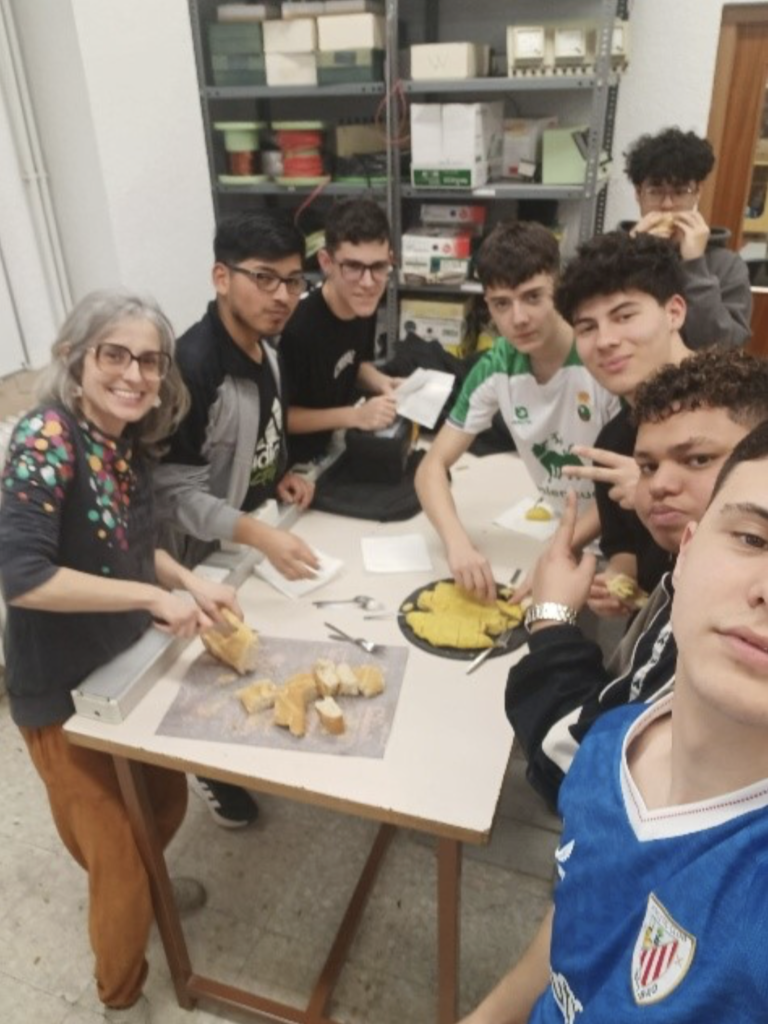
Students activity at CIFP Santa Catalina
The cascade process reached educators from:
- Primary Education.
- Secondary Education.
- Vocational Education and Training.
- Rural schools.
- Urban schools.
- Early childhood education settings.
Training sessions addressed restorative practices, democratic participation, social innovation competences, empathy-building activities, inclusion strategies, and project design methodologies. Evidence collected from monitoring sessions demonstrates active engagement among teachers and a commitment to further implementation during subsequent academic years.
The registration data show that the transfer process involved numerous schools and hundreds of students through planned classroom implementations. Some centres projected interventions involving entire school communities, while others focused initially on smaller pilot groups before scaling up.
Teacher Reflections and Professional Growth
Teacher reflections collected during the cascade phase reveal a strong appreciation for the EU-SIDE framework. Participants repeatedly highlighted the practical value of having a structured competence framework for addressing complex social challenges in educational settings.
Several recurring themes emerged:
- Increased confidence in designing real-world learning experiences.
- Greater awareness of democratic and inclusive pedagogies.
- Improved ability to facilitate dialogue and participation.
- Enhanced understanding of empathy and social innovation.
- Recognition of the importance of interdisciplinary collaboration.
Teachers also identified common challenges, particularly the need for additional time, assessment tools for social competences, practical examples, and opportunities for collaborative planning. However, these challenges were often accompanied by strong motivation to continue implementing EU-SIDE approaches.
Many participants emphasized that working alongside colleagues from different educational sectors broadened their perspectives and strengthened their understanding of how democratic and social competences can be developed progressively across all educational stages.
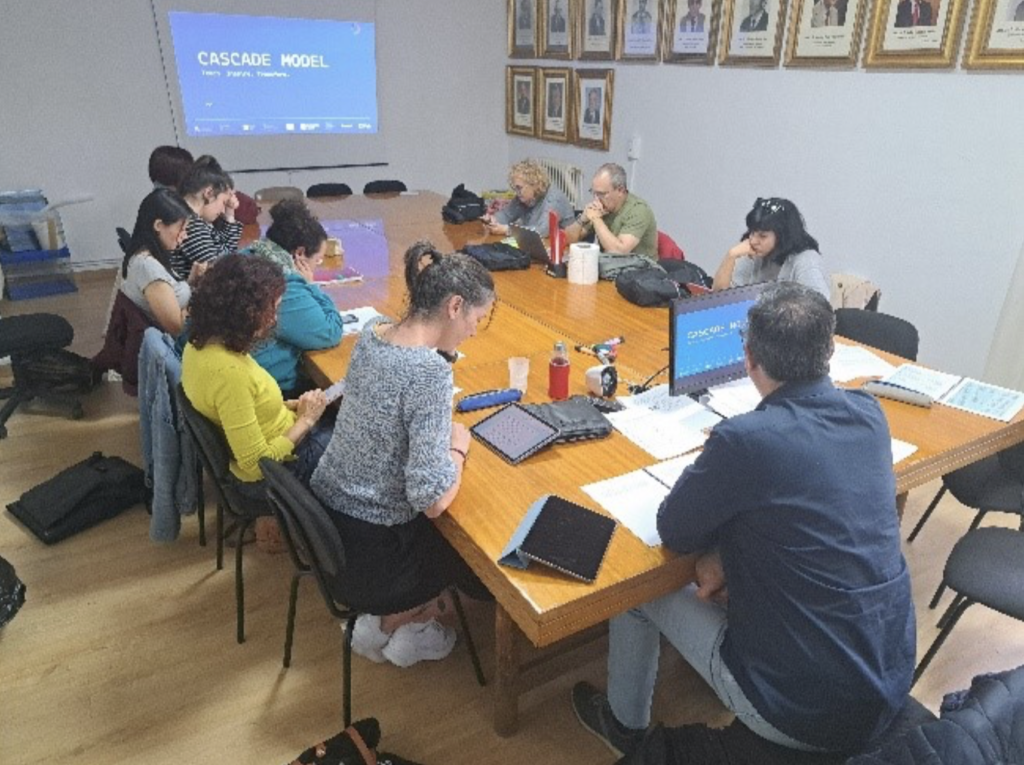
Cascade training at IES Conde Diego Porcelos
Conclusions
The Short-term Activity Programme held in Leiria represented far more than an international training event. It became a catalyst for educational transformation, equipping teachers with practical methodologies that support democratic participation, social innovation, inclusion, and restorative approaches to school life.
The subsequent cascade training process demonstrated the sustainability and scalability of the EU-SIDE approach. Teachers transferred their learning to colleagues, developed innovative projects tailored to local needs, created opportunities for student participation, and promoted more inclusive and democratic school cultures.
Whether through dialogue circles, inclusive playground initiatives, intercultural projects, democratic assemblies, or community-based learning experiences, participating schools showed that social innovation begins with meaningful relationships and active citizenship. By empowering both teachers and students to become agents of change, EU-SIDE continues to contribute to the development of more democratic, empathetic, and resilient educational communities across Europe.

Publicaciones recientes


Los proyectos están cofinanciados por la Unión Europea. Las opiniones y puntos de vista expresados en esta web sólo comprometen a sus autores del CFIE de Burgos y no reflejan necesariamente los de la Unión Europea ni los del Servicio Español para la Internacionalización de la Educación (SEPIE). Ni la Unión Europea ni la Agencia Nacional SEPIE pueden ser considerados responsables de ellos.
#ErasmusPlus
Construyendo educación europea
La internacionalización educativa permite a los centros ampliar su perspectiva, compartir experiencias con otros sistemas educativos y mejorar las oportunidades de aprendizaje del alumnado.
En el CFIE de Burgos seguimos trabajando para impulsar la dimensión europea de la educación en nuestra provincia.